
Coming soon
ライチュウ
038 • 拡張パック
Oct 20, 1996
A collector guide to reading rarity, holo treatment, premium art types, and set context so you can quickly spot stronger Raichu pulls.
The fastest first read is the rarity line and finish. Rare Holo, Secret Rare, Illustration Rare, and similar labels instantly tell you a card sits above routine uncommon or non-holo copies.
Full-art and illustration-style cards usually stand out through border treatment, art coverage, and premium set placement. Those visual cues often matter more than the card name alone.
A common-looking card can still be important if it is from a scarce early set, a trainer kit, or a memorable variant line. Set context is part of rarity, not just the symbol printed on the card.
If two Raichu listings use similar names, the card number and set are usually the fastest way to separate them. This is especially important for full-art, promo, and illustration-style cards where sellers may use broad title wording.
A card can look premium without being the most expensive print, and a plain vintage holo can still outrank flashier modern cards. Check rarity, finish, age, and current market context together.
Rare Raichu cards are usually easiest to identify by rarity line, foil treatment, premium frame treatment, and where the card sits inside its set.
038 • 拡張パック
024 • 化石の秘密
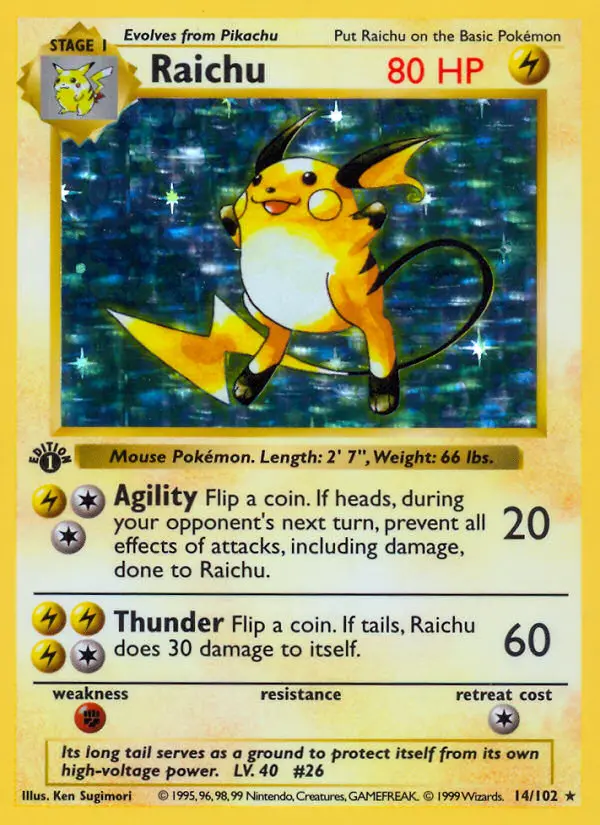
14 • Base Set
041 • 闇からの挑戦
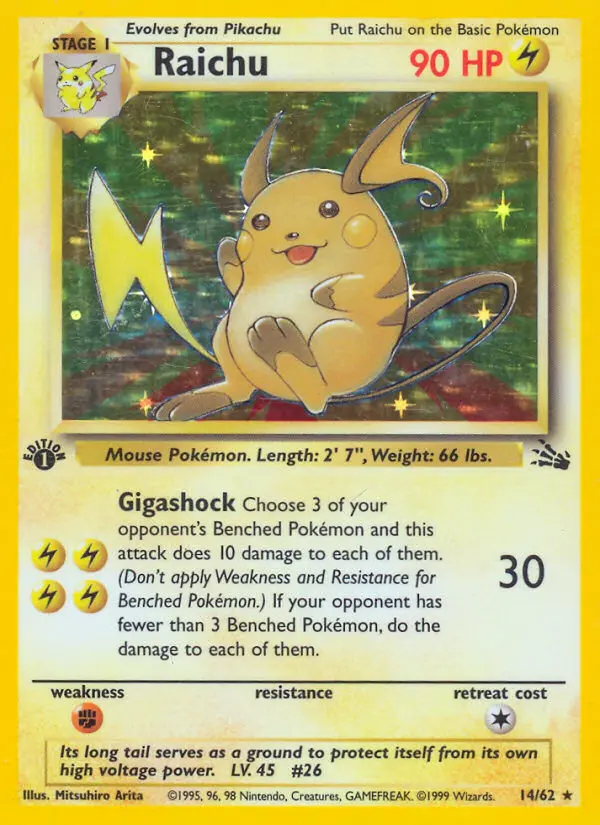
14 • Fossil
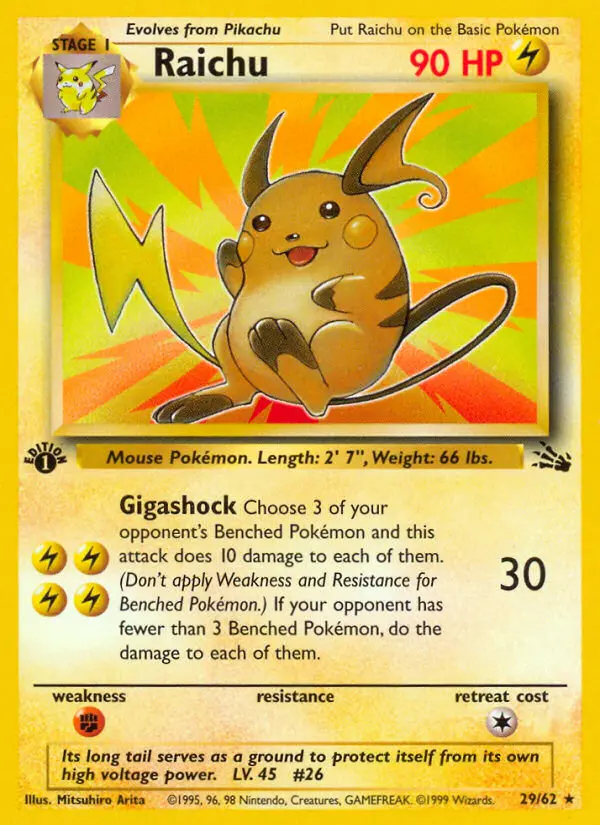
29 • Fossil
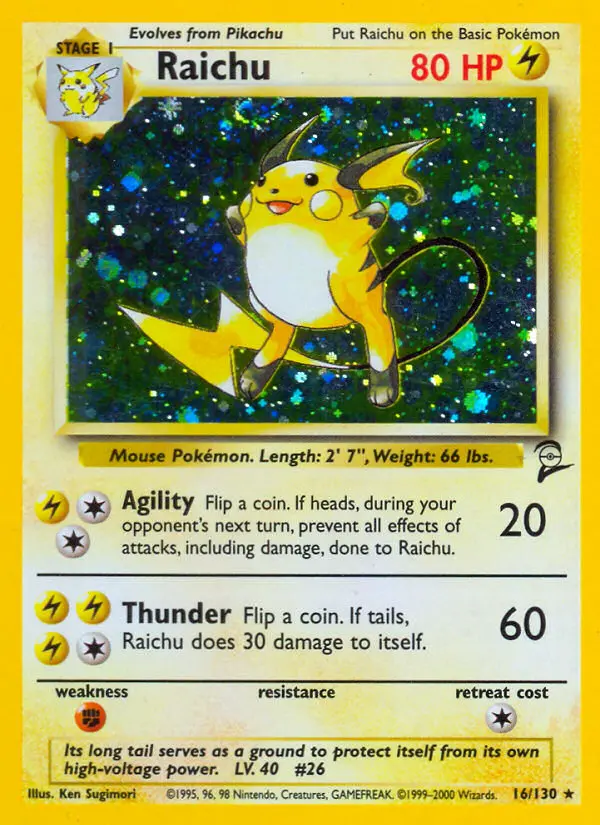
16 • Base Set 2
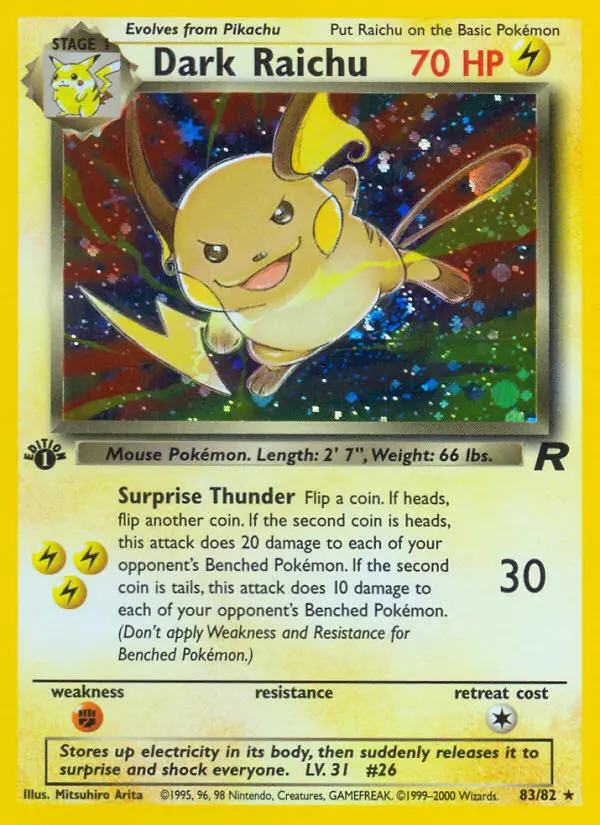
83 • Team Rocket
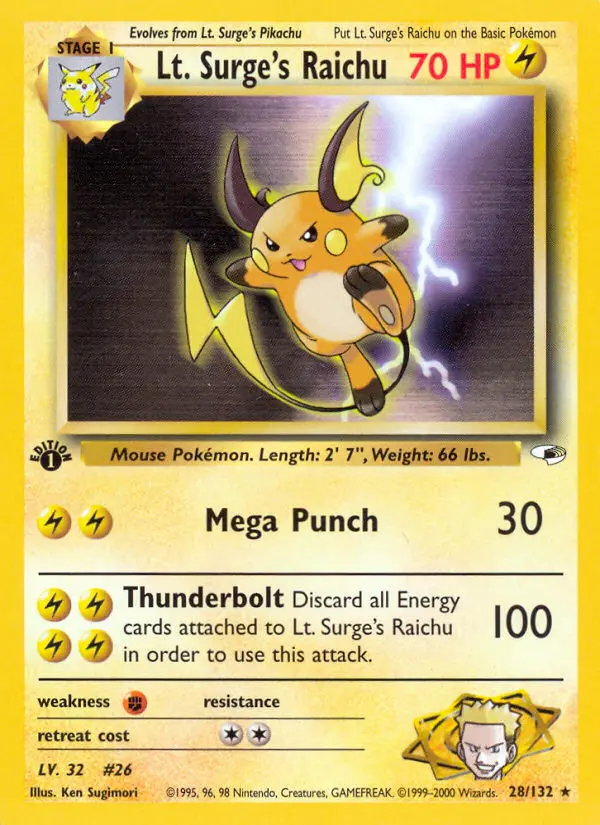
28 • Gym Heroes
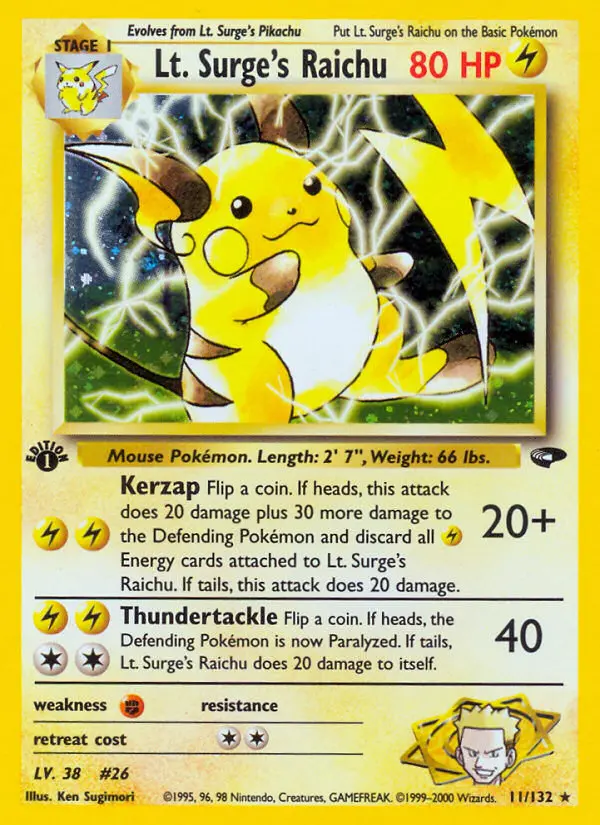
11 • Gym Challenge
These guides cover the next collector questions that usually come up after this topic, including rarity, value, era history, and variant-specific checklists.